
GRAMMA did not begin as just another clothing line. It began with an idea: that every object we create is a letter — something we send to someone, with meaning, with care, with a story inside it. That’s why the name. It’s not accidental.
Behind GRAMMA stands Evangelia Grammatiki, founder and curator of the House. Her surname, “Grammatiki” — Greek for “grammar” — is no coincidence: in Greek, the word describes the invisible architecture that turns the chaos of sound into meaningful speech. Her studies were a continuous conversation between two worlds: Fashion Design, the language of material, touch, and form, Russian Philology, the language of spirit and inquiry. GRAMMA was born exactly where these two worlds met.
She doesn’t see herself as a designer, but as a “Curator.” Her goal isn’t to dress bodies, but to offer tools for introspection, objects of substance.
GRAMMA doesn’t want to be called a “fashion brand.” The term that fits is cultural house — because what it creates isn’t only clothing. It’s clothing, it’s ceramics, it’s blown glass, it’s olive-wood jewelry, and it’s also a book. All part of the same story, all “Letters” — the mosaic pieces with which each of us composes our own personal story.
Everything begins at the atelier in Pagondas, Samos, at the edge of the Aegean — a place of stillness, where every design and every idea of GRAMMA is born.
This philosophy doesn’t stay only in the objects. Every first Friday of the month, Evangelia speaks live at GRAMMA’s Facebook Live about fashion, art, and culture — an open conversation, not a monologue.
At GRAMMA, each collection isn’t simply called a “collection” — it’s called a Chapter, because each one has its own voice.
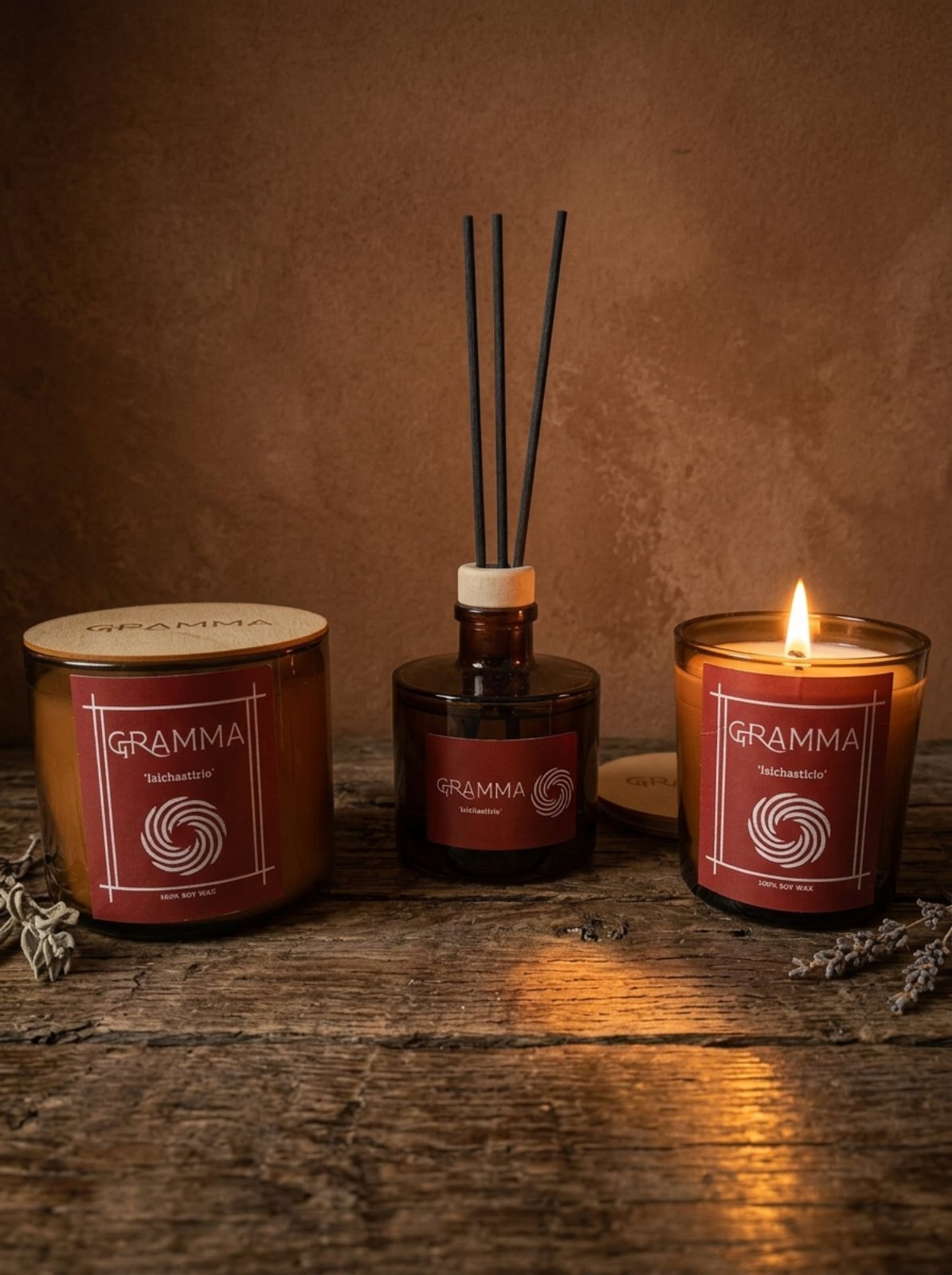
Isichastirio is GRAMMA’s quiet luxury: garments that flow without interruption, like a second skin, inspired by the idea of inner stillness. Imagine wearing a dress like “Serenity” with an Isichastirio kimono over it, like an impenetrable wall of calm through your day.
Arpedoni brings geometry into clothing, inspired by the ancient “Harpedonaptai” — those who stretched ropes to mark precise lines and angles in architecture. The garment, like architecture, has its own proportions, its own lines that hold meaning.
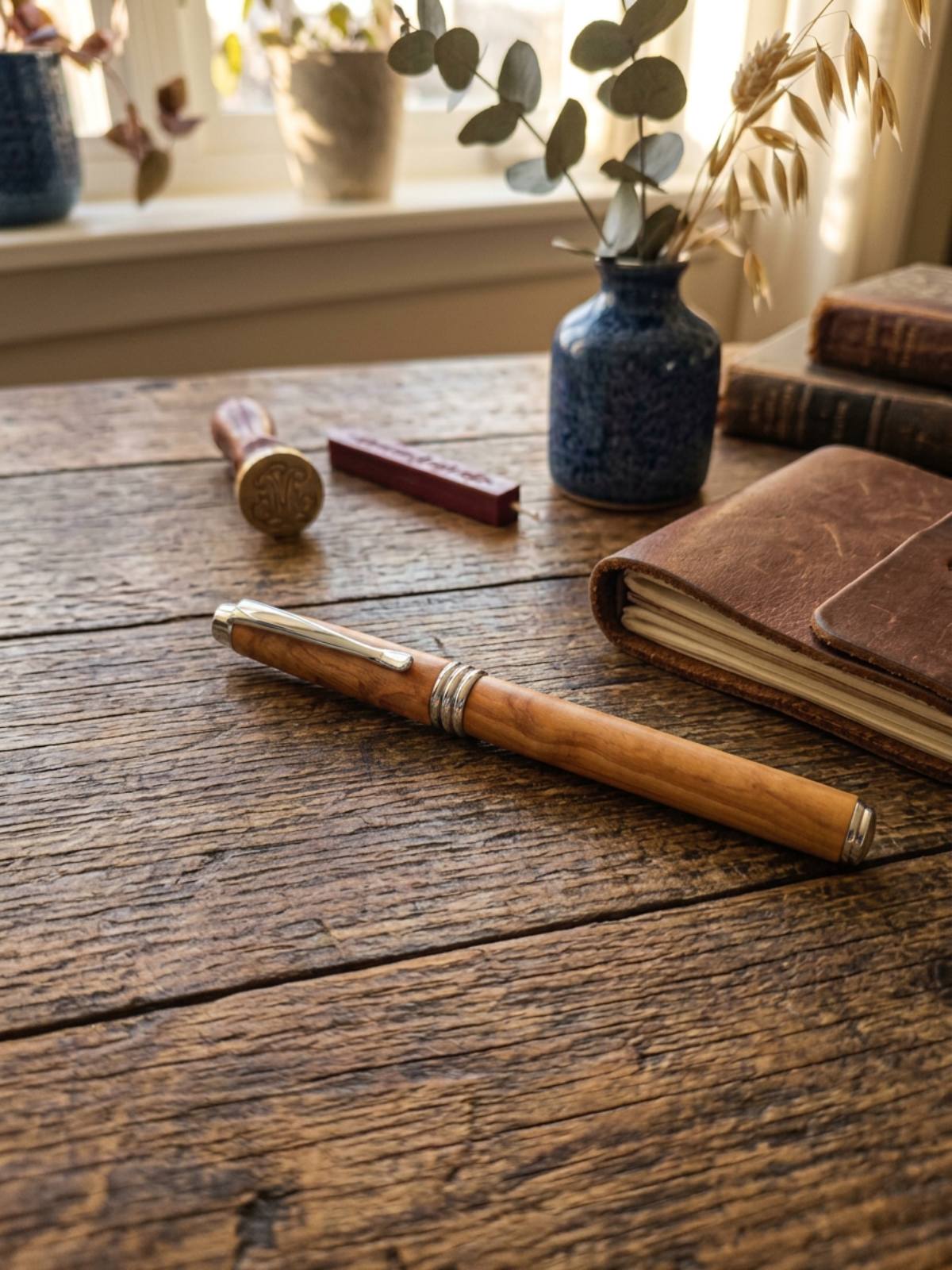
This is narrative fashion for GRAMMA: it isn’t only about clothing, it’s about every object we create. A garment isn’t just fabric, a cup isn’t just clay, a pen isn’t just olive wood — each is a story you hold, wear, or use. The same philosophy continues in the ceramics, the blown glass, and the handcrafted olive-wood objects — all speak the same language.
The idea that what we wear affects how we feel isn’t only poetic — it has scientific grounding too. In 2012, psychologists Hajo Adam and Adam Galinsky showed something significant: when two groups wore the exact same white coat, but one was told it was a doctor’s coat and the other a painter’s coat, those who believed they were wearing a doctor’s coat performed with noticeably better attention on the tests that followed. Same garment, different outcome — simply because they knew what they were wearing. This is, for us, the essence of GRAMMA: knowing an object’s origin, why and from what it was made, turns a simple gesture into a statement, into a ritual.
The semiotician Roland Barthes, in The Fashion System, argued something similar from a philosophical angle: a garment is never “just fabric” — it is always a carrier of meaning, a system of signs to be “read.” Every garment, he said, splits into two parts, much like a word: the signifier (its outward image — the color, the fabric, the cut) and the signified (the idea or feeling behind it). This distinction is, ultimately, narrative fashion in a single sentence.
GRAMMA didn’t stop at clothing. The Maze is a manual of introspection — an invitation to see your cracks not as flaws, but as the golden veins that tell your story. Because the deepest art of GRAMMA isn’t the garment or the object — it’s how we shape ourselves.
If you’d like to go deeper into each side of our philosophy:
H2: How to Start With GRAMMA
If you’re wondering where to start getting to know GRAMMA, read our Journal — there you’ll find the full philosophy behind each Chapter, along with invitations to our monthly live gatherings.
What is GRAMMA?
GRAMMA is a Greek cultural house based in Pagondas, Samos, creating clothing, ceramics, blown glass, olive-wood jewelry, and books, all through the same philosophy.
Who founded GRAMMA?
GRAMMA was founded by Evangelia Grammatiki, who studied Fashion Design and Russian Philology.
What does “narrative fashion” mean at GRAMMA?
It’s the idea that every GRAMMA object — garment, ceramic, or accessory — isn’t just material, but a story you hold or wear, part of a specific Chapter with its own meaning.
How can I watch GRAMMA’s live gatherings?
GRAMMA hosts a Facebook Live every first Friday of the month, with Evangelia Grammatiki speaking about fashion, art, and culture.